 Back (Rod Grenades, Overview)
 As the years of W.W.II progressed, the Germans were faced with an ever increasing armor threat, especially on the Russian Front against the T-34 tank. The German 3.7cm
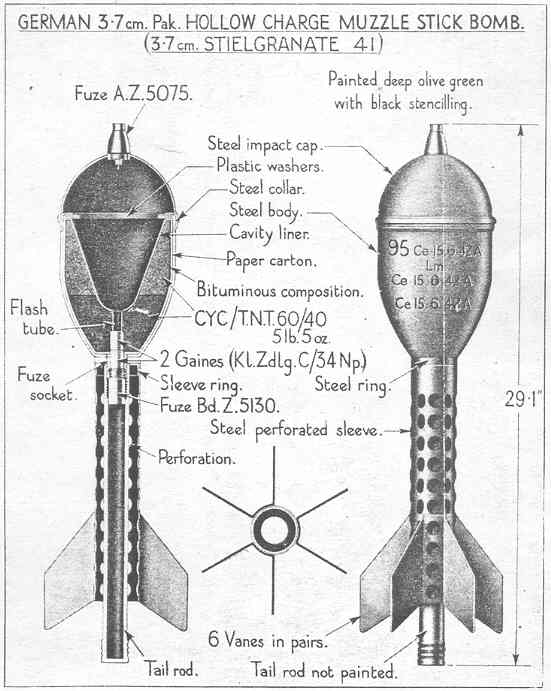
PAK (Panzerabwehrkanone) 36 anti-tank gun was in wide spread use but became increasingly ineffectual against tanks by 1941. This is a finned rodded-bomb with a massive hollow charge warhead. Muzzle-loaded onto the PAK 36 and propelled by a special cartridge. |
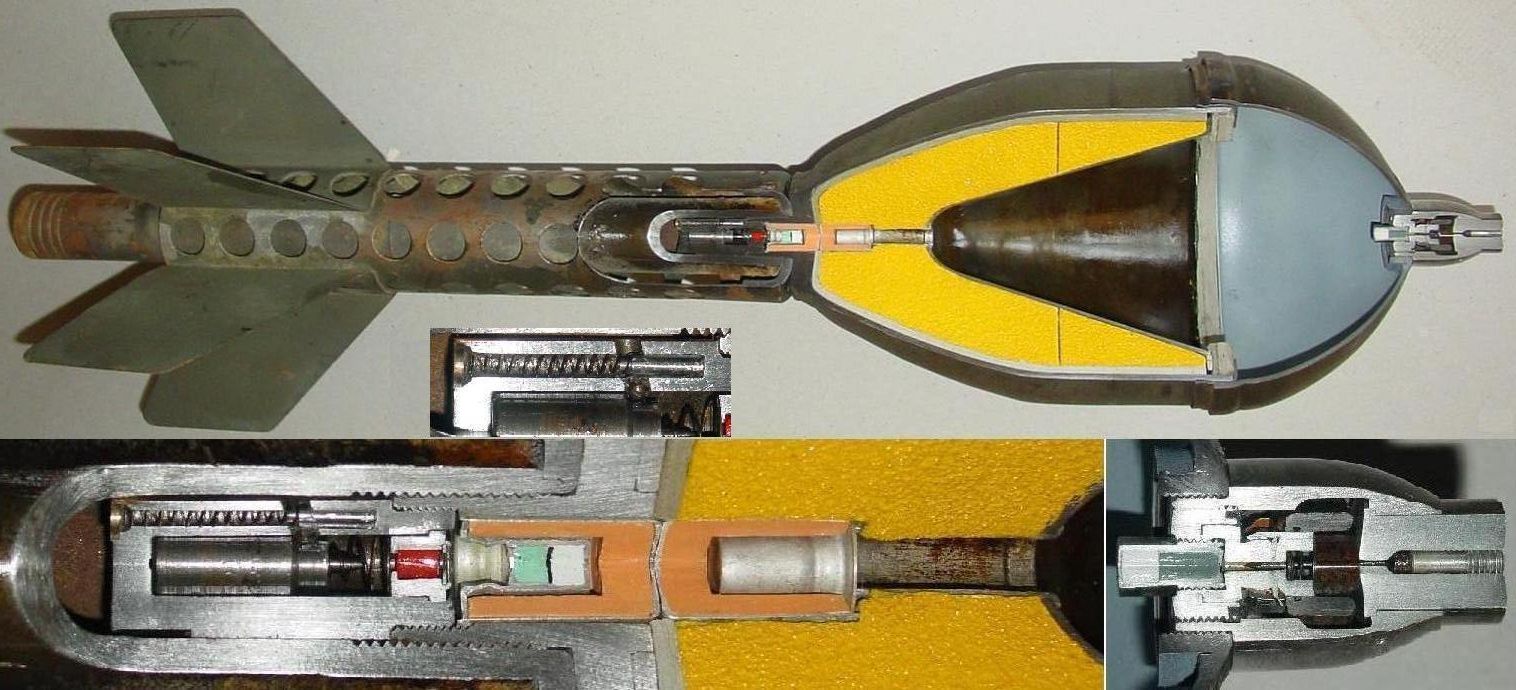 The projectile was loaded in the muzzle of the gun, like a rod grenade and was fired with a special propellant cartridge. There are three gas-check cannelures in the base of the rod to reduce gas blow-by, as was typical for things like mortar rounds. A curious feature of the Stielgranate 41 is that it used both a point detonating and base detonating (graze) fuze. An uncommon fuze combination for a hollow charge munition. |
 |
|
|
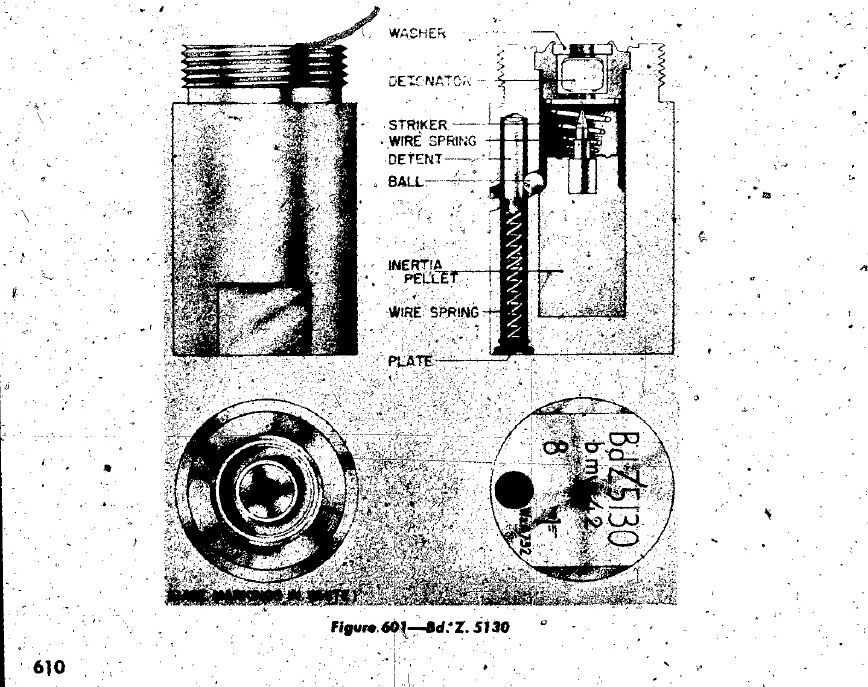
The fuzes used were (Right-to-Left): AZ 5075 - Aufschlagzünder 5075 AZ 5095 - Aufschlagzünder 5095
Bd Z 5130 - Bodenzünder 5130
|
|
 Here is the PAK 36 with the Stielgranate 41 attached. Note the 37mm round in the grass at the lower right. German PAK 36 compared to the U.S. M3  |
|
20.04.27
Copyright© 2001-2020 Inert-Ord.netBack
(Rod Grenades, Overview)